
ZERO UI IN THE GAME INDUSTRY
Design Research · Game UX · Interaction Design · Systems Thinking
Research Question
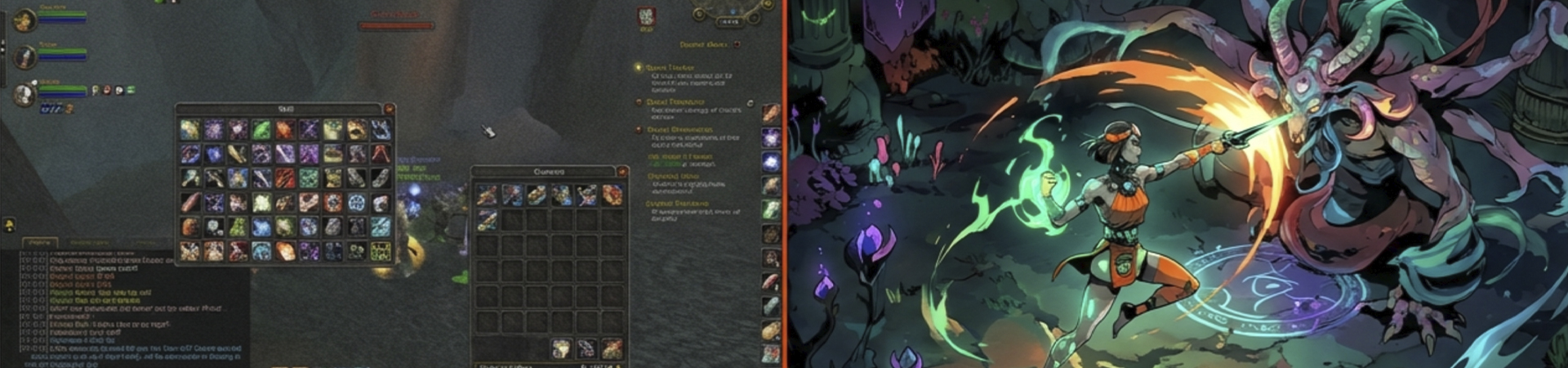
What if the most powerful interface in a game isn't on your screen, but hidden in the enemy's movement?
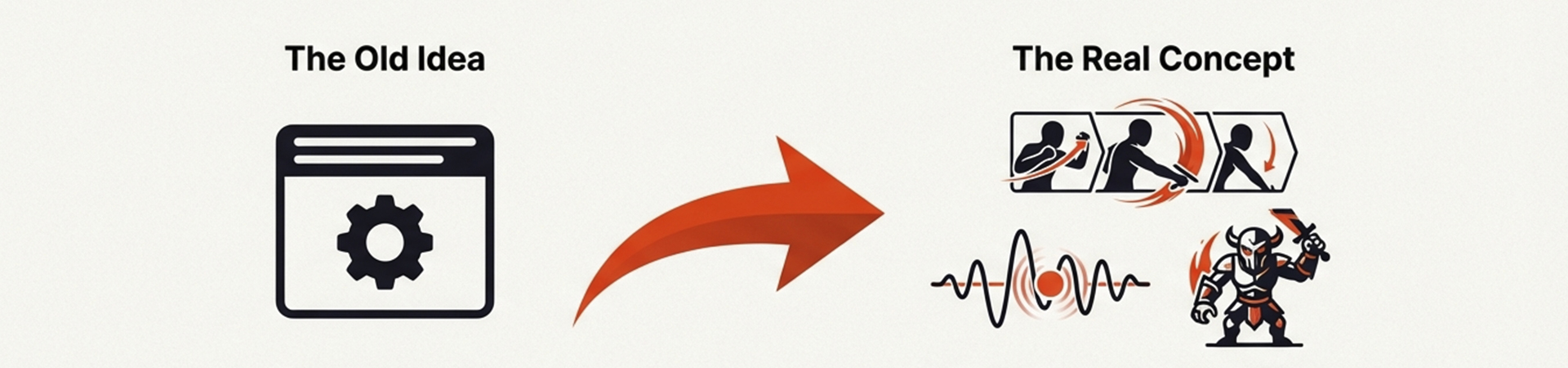
Zero UI is not simply about having no interface.
The traditional idea focuses on removing on-screen menus and GUIs. The broader concept embeds game logic and information directly into the game world, so communication happens through gameplay itself.
Core Principles
Deterministic Systems: Enemies and environments follow fixed, readable rules. They operate on a script rather than adaptive learning.
Implicit Communication: Information is conveyed through animation “tells,” audio cues, and environmental changes.
The Goal: Turn game mechanics into a learnable “language” for the player.
The Developer’s Choice: Why Predictable Is Powerful
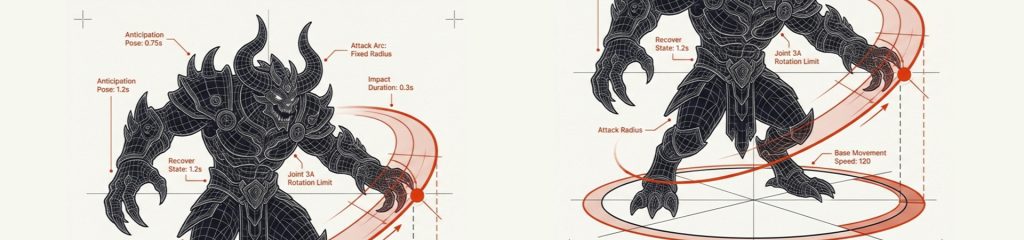
For this research, I looked beyond the player's experience and considered why deterministic systems can also be valuable from a developer's perspective. Games don't necessarily need truly “smart” AI. They need stable, balanced systems that create compelling challenges.
Technical & Design Benefits
Total Control: Deterministic AI lets you tune difficulty precisely, creating a consistent player experience.
Stability & Optimization: Systems with fixed rules are easier to debug and can be less CPU-intensive than complex, adaptive AI.
Clear Communication: Predictable patterns create readable combat, allowing players to learn an enemy's “language” through exposure.
How Today’s Most Influential Games Speak to the Player
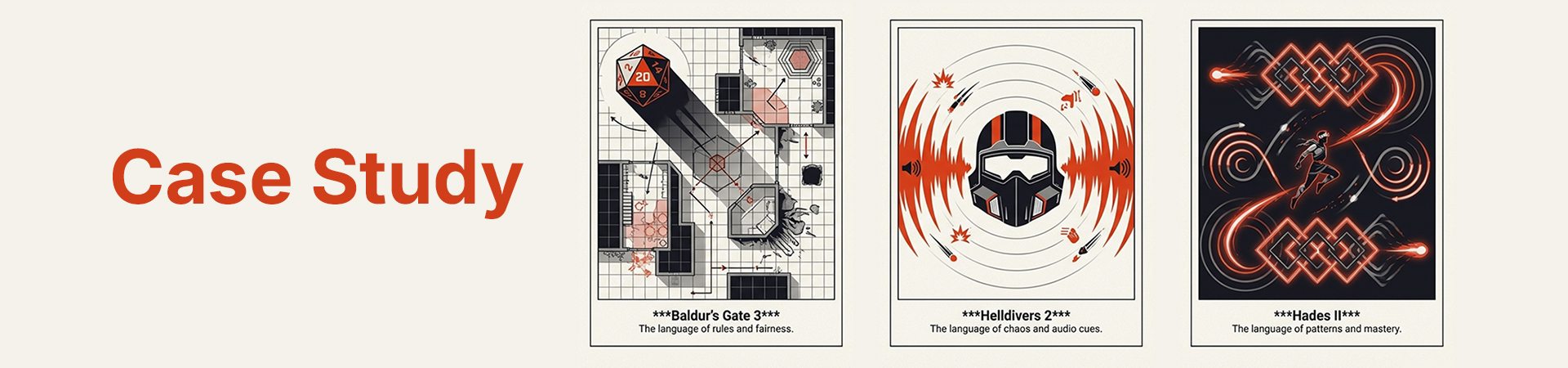
I analyzed three games to understand how deterministic systems can communicate without relying entirely on traditional UI. Each game uses a different “dialect” of this invisible language.
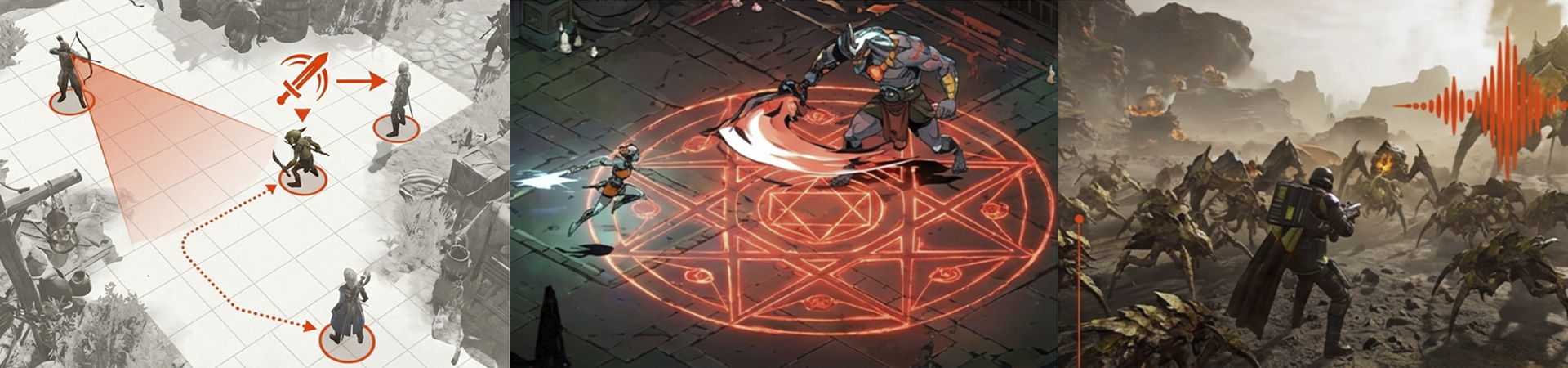
Baldur’s Gate 3: The language of rules and fairness.
Helldivers 2: The language of chaos and audio cues.
Hades II: The language of patterns and mastery.
Case Study: Baldur’s Gate 3
Fairness comes from understanding the world’s rules.
The game communicates enemy intent not through hidden AI, but through transparent, tabletop-inspired mechanics.
How It Works
Explicit Rules: Players can see what an enemy can do based on their position, class, and available actions.
Positional Tells: The world feels manageable rather than random because players can predict an enemy’s move by looking at their position and stance.
Result: Strategy is based on reading a visible, unchanging rule set rather than guessing at a “smart” AI decision.
Case Studies: Helldivers 2 & Hades II
In action games, Zero UI is about survival through observation.
Helldivers 2: Communicating Chaos.
Developers use narrator voices and distinct audio cues to manage swarm mechanics without relying on on-screen text.
The player learns to listen, not just look.
Hades II: Mastering the Dance
This genre is built on “tells.” Players learn to read a boss’s unique animations and attack loops. Victory feels like a mastered skill rather than luck, because every move can be read and countered.

The Player Experience: Why Invisible Design Feels Fair
The research then shifts from how systems work to how they feel to the player.
The Fairness Factor
Games feel fair when players can predict an enemy’s move simply by looking at them. This reduces the feeling of being “cheated” by an all-knowing AI.
Achieving Flow
Pattern-based design reduces “brain clutter.” By reducing the need to read text or interpret complex UI, players can focus on the rhythm of gameplay.
Earned Success
When players succeed, they attribute it to their own mastery of the game’s “language,” rather than the game simply “letting” them win.

The Developer’s Dilemma: The High Cost of Invisibility
There is a paradox at the center of Zero UI:
Removing a simple menu is often more expensive and time-consuming than creating one.
The True Requirements
High-Fidelity Assets
Simple text must be replaced with high-quality, unambiguous animations and carefully designed sound to convey the same information.
Intuitive Onboarding
Design must rely on trial-and-error learning, requiring careful pacing and level design to teach mechanics without a manual.
The “Costly” Choice
Developers invest heavily in these systems not because they are cheaper, but because they believe the immersive payoff is worth it.
The Future Is Unwritten, But Less Is on Screen
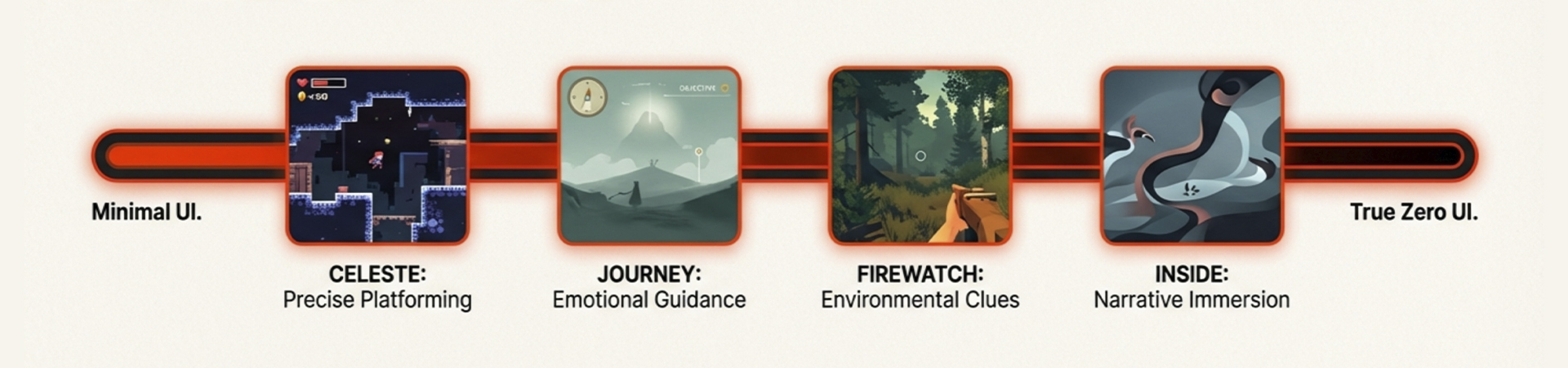
The research points toward a broader movement within game design: reducing on-screen elements and allowing the game world itself to carry more of the communication.
Key Industry Trends
The Minimalist Movement
A growing trend toward reducing on-screen elements so players feel less detached from the game world.
The Indie Advantage
For smaller studios, pattern-based design can focus on essential storytelling without the cost of complex UI systems.
The Search for Balance
The strongest experiences can combine predictable patterns with enough unpredictability to keep gameplay exciting and avoid becoming stale.
The Known Limit
As game systems become overwhelmingly complex, a pure Zero UI approach can fail, making some traditional menus necessary for clarity.
The Unseen Language
Zero UI is not a technical constraint or simply an aesthetic trend. It is a design philosophy that prioritizes immersion, fairness, and player agency by building a world that communicates with the player.

WHAT I TOOK FROM THE RESEARCH
This research changed how I think about interfaces. An interface does not always have to appear as a visible layer on top of an experience.
It can exist in:
movement.
sound.
animation.
patterns.
environment.
When these signals are consistent and learnable, players begin to understand them without needing to be explicitly told what they mean. Zero UI is ultimately about designing a language between the system and the player.
PROJECT INFORMATION
Project
ZERO UI IN THE GAME INDUSTRY: Deterministic Systems as Implicit Interfaces
Type
Design Research
Focus
Game UX · Interaction Design · Systems Thinking · Implicit Interfaces
Thank you!