

DuoShopper
Designing a more human way to shop online
After moving to Germany for my Master's studies, I started experiencing a small problem that became the starting point for this project. I often shop online on my own, but whenever I feel unsure about what to buy, especially clothes, I still want my sisters' opinions. My sisters live in my home country, so I usually send them screenshots or product links and ask which one they think would look better on me.
Although this helped me make decisions, the experience always felt fragmented. I would browse a website, take a screenshot, switch to WhatsApp, send it to my sister, wait for her response, and then go back to the website. Sometimes I would send another link because I wasn't sure about the first one. It made me realise that what I actually wanted wasn't just their opinion I wanted to experience shopping with them, even though we were physically far apart.
That personal experience made me ask myself: What if two people could simply shop together online, just like they would in a physical store?
That question became the starting point for DuoShopper.
Core Idea
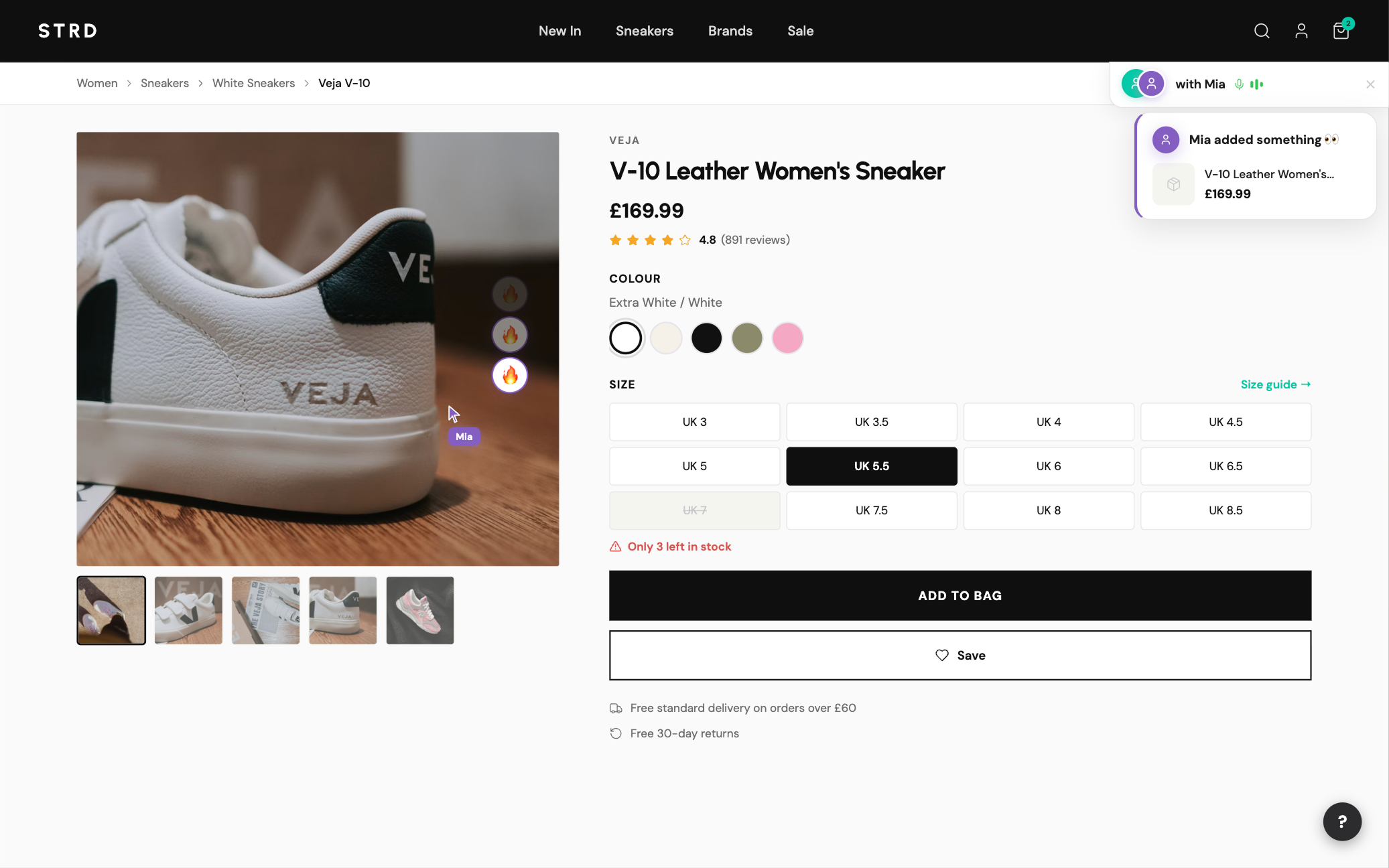
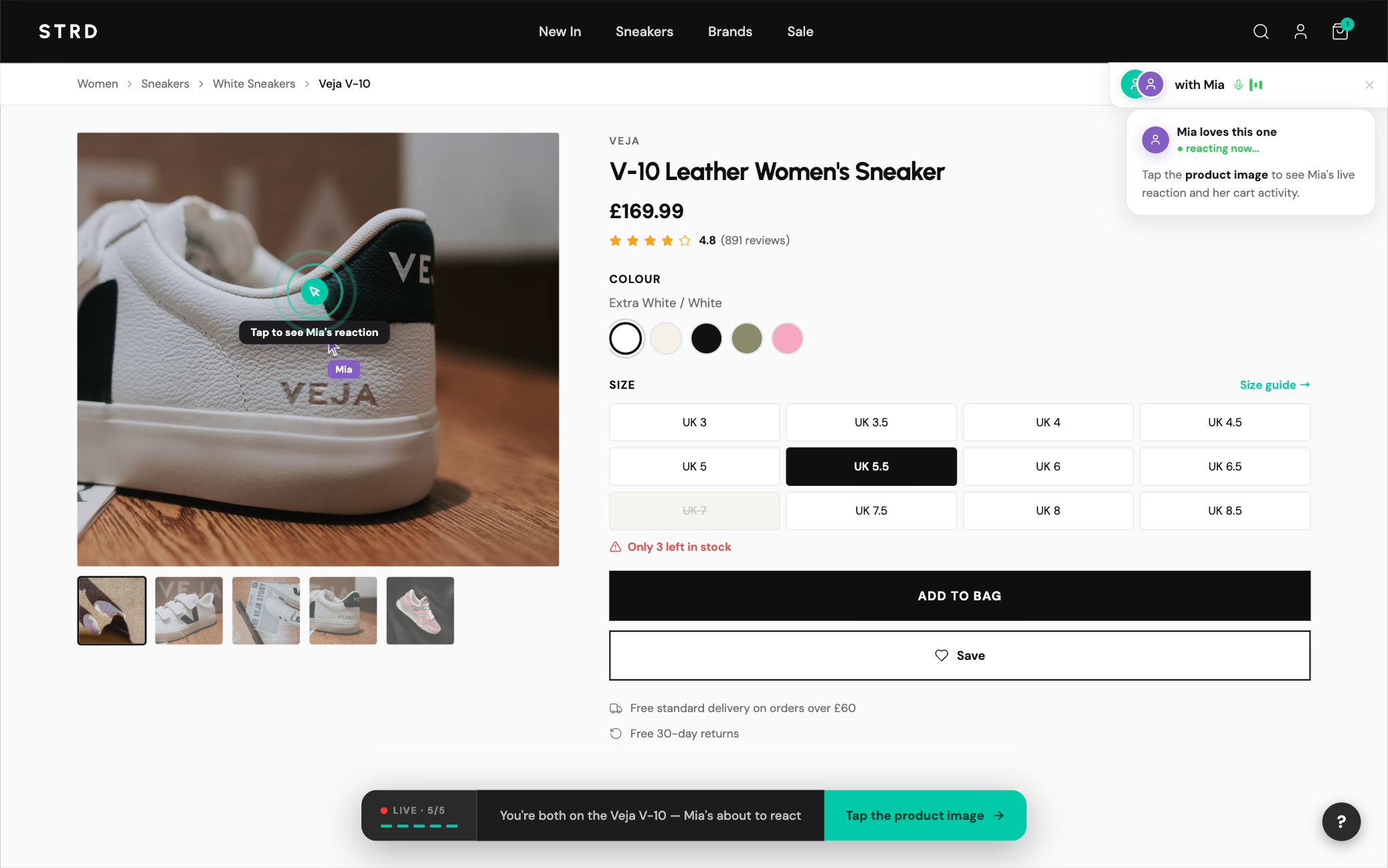
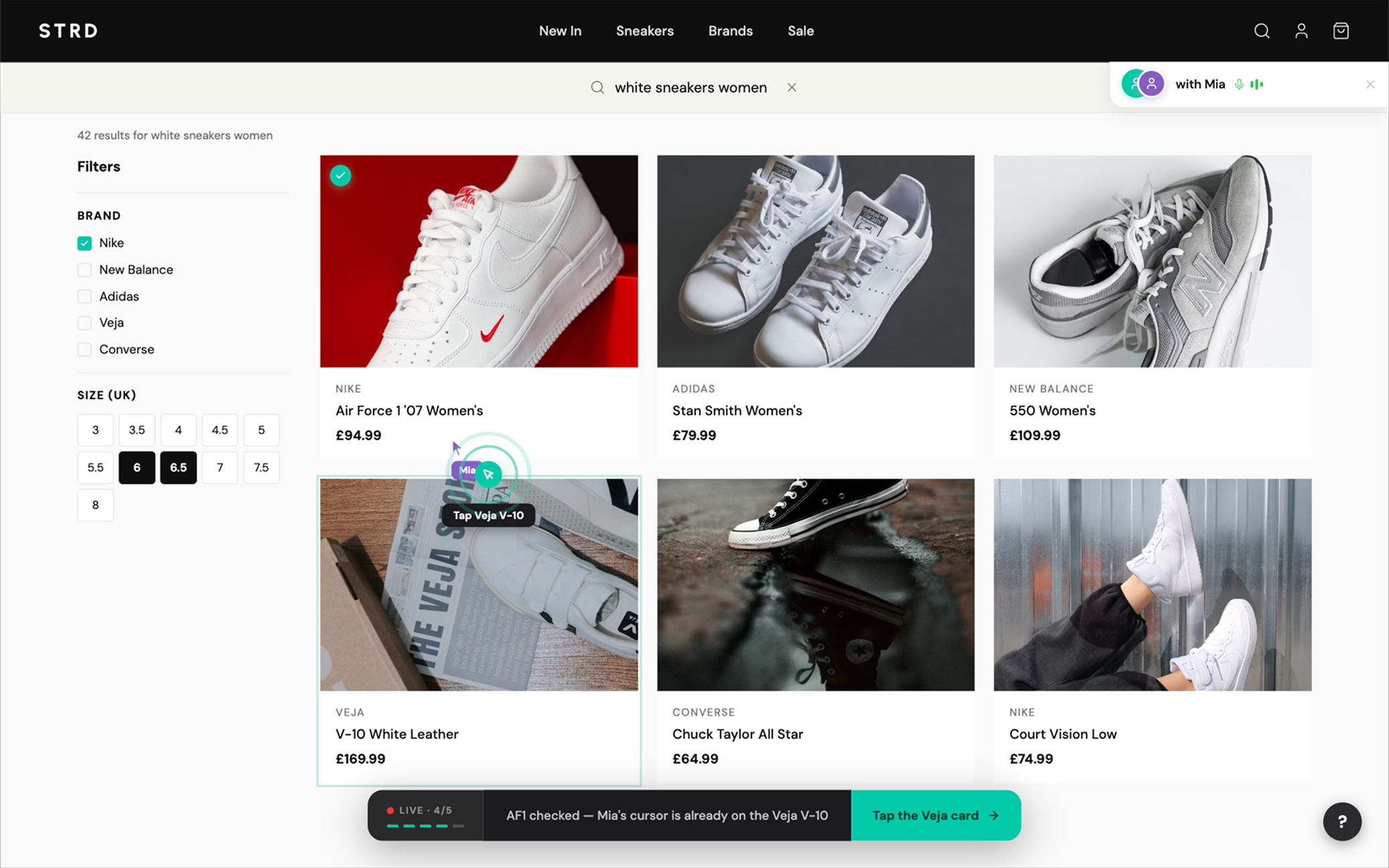
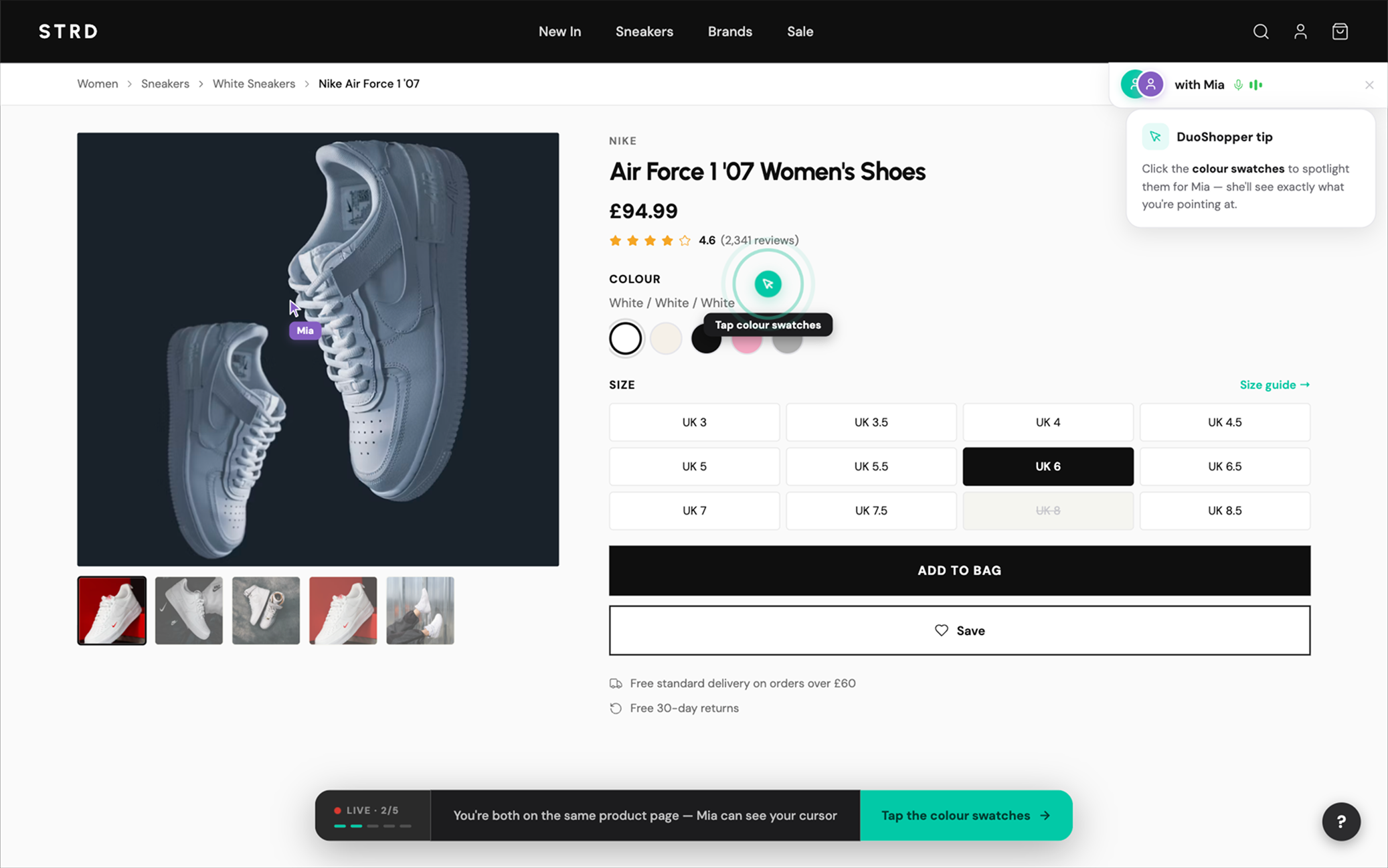
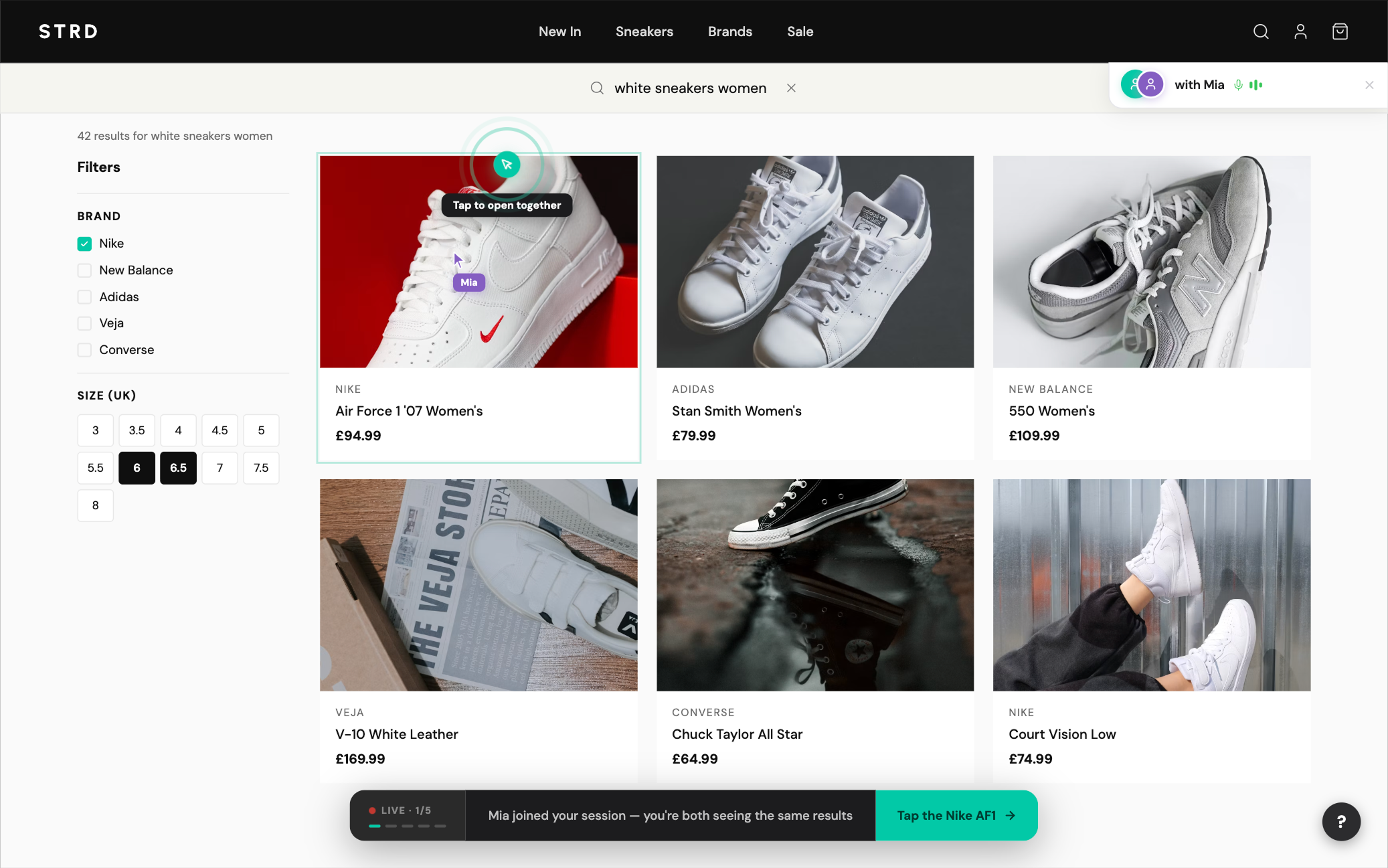
DuoShopper is a browser add-on that allows two people to shop on any website together in real time. Both users can browse the same page, see each other's live cursors, communicate through live voice, and react directly to the products they are looking at.
The idea was not to build another shopping tool with more features. I wanted to recreate a familiar social experience: the feeling of walking through a shopping mall with someone and naturally asking, “What do you think about this one?”This became the central design principle for the project: don't build another shopping tool; recreate the feeling of walking through a mall with someone.
For me, DuoShopper is about making distance feel smaller. Whether the other person is your sister, friend, partner, or roommate, the experience should make you feel like you are looking at the same thing together.
The Problem
We already shop with friends. We just use the wrong tools.
My own experience made the problem very clear to me. When we want someone's opinion while shopping online, we usually have to leave the shopping experience to communicate with them.
We take a screenshot and send it through WhatsApp, but then we have to wait for a reply. We send a product link, but our friend may already be doing something else by the time they open it. We can also use screen sharing, but that can feel disconnected and cumbersome when all we really want to do is browse and talk casually.
The problem, therefore, isn't that people don't want to shop together online. The problem is that the tools we currently use weren't designed around that behaviour.
The research in my project supported this opportunity as well. The presentation identified that 23.5% of consumers prefer group shopping with friends and family, 78% of shoppers share items with friends before buying, and shopping sessions can be longer when a friend is present.
This made me see an opportunity to design something that brings the social part of shopping directly into the shopping experience.
The Solution
Bringing the conversation into the shopping experience
My solution was DuoShopper: a browser experience where two people can stay on the same shopping page and interact with each other while browsing.
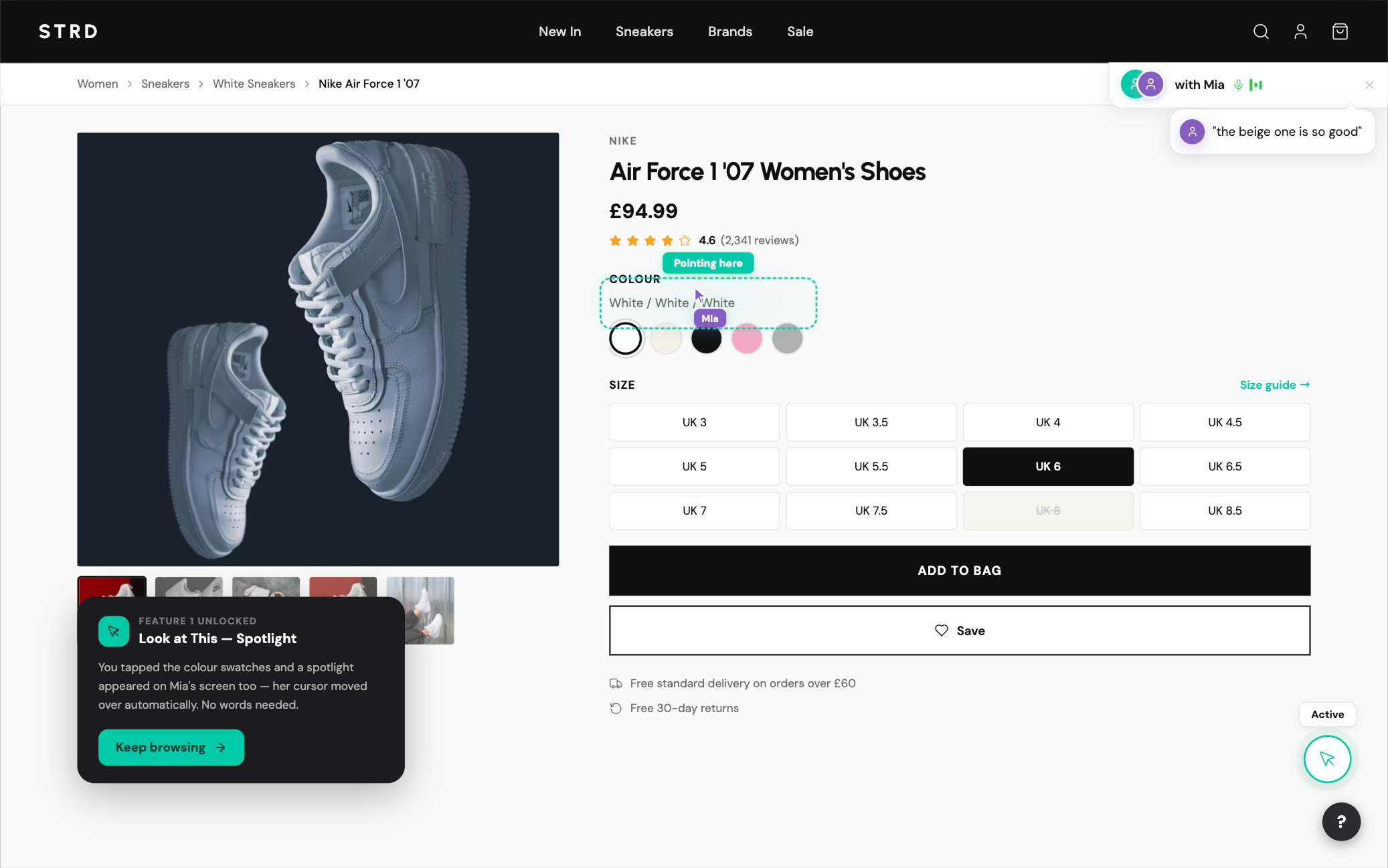
Instead of taking a screenshot and sending it somewhere else, users can see where their friend is looking through a live cursor. Instead of sending a voice note, they can talk naturally through live voice. Instead of explaining which product they mean, they can use reactions and spatial attention directly on the page.
The goal was to remove the unnecessary steps between seeing something, sharing it, and getting another person's reaction.
I wanted the technology to stay in the background so that the experience itself remained simple and social.
The User Journey
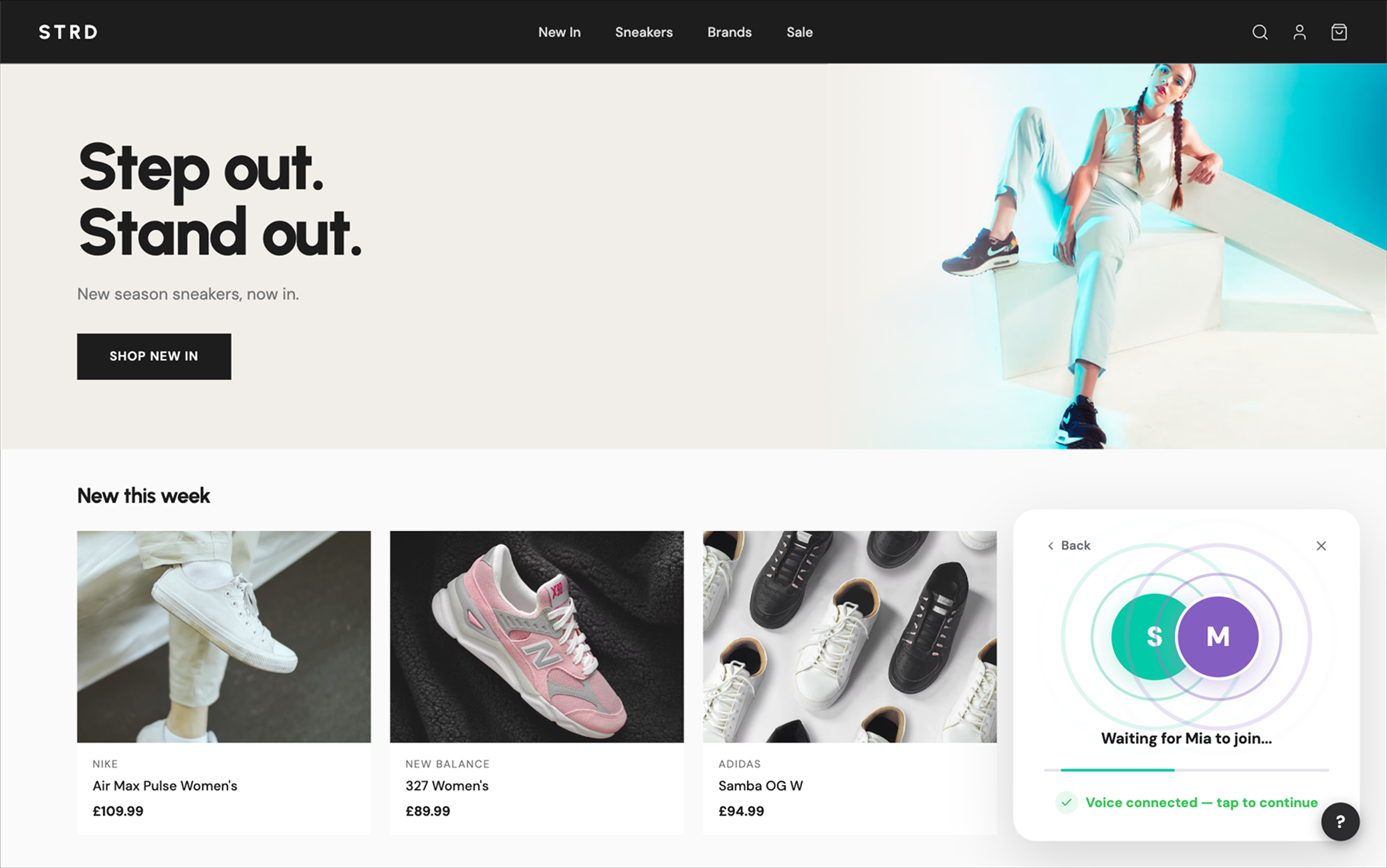
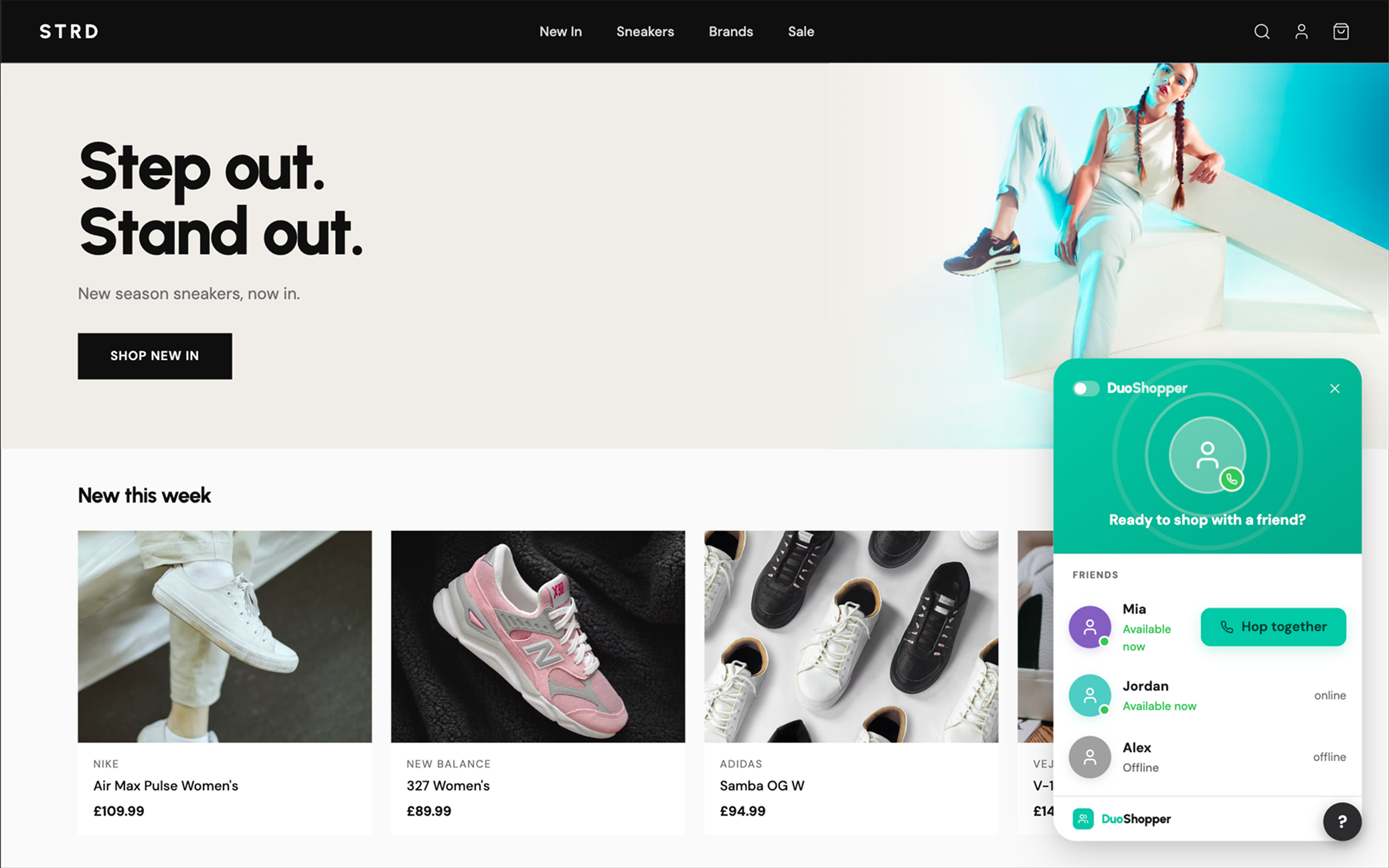
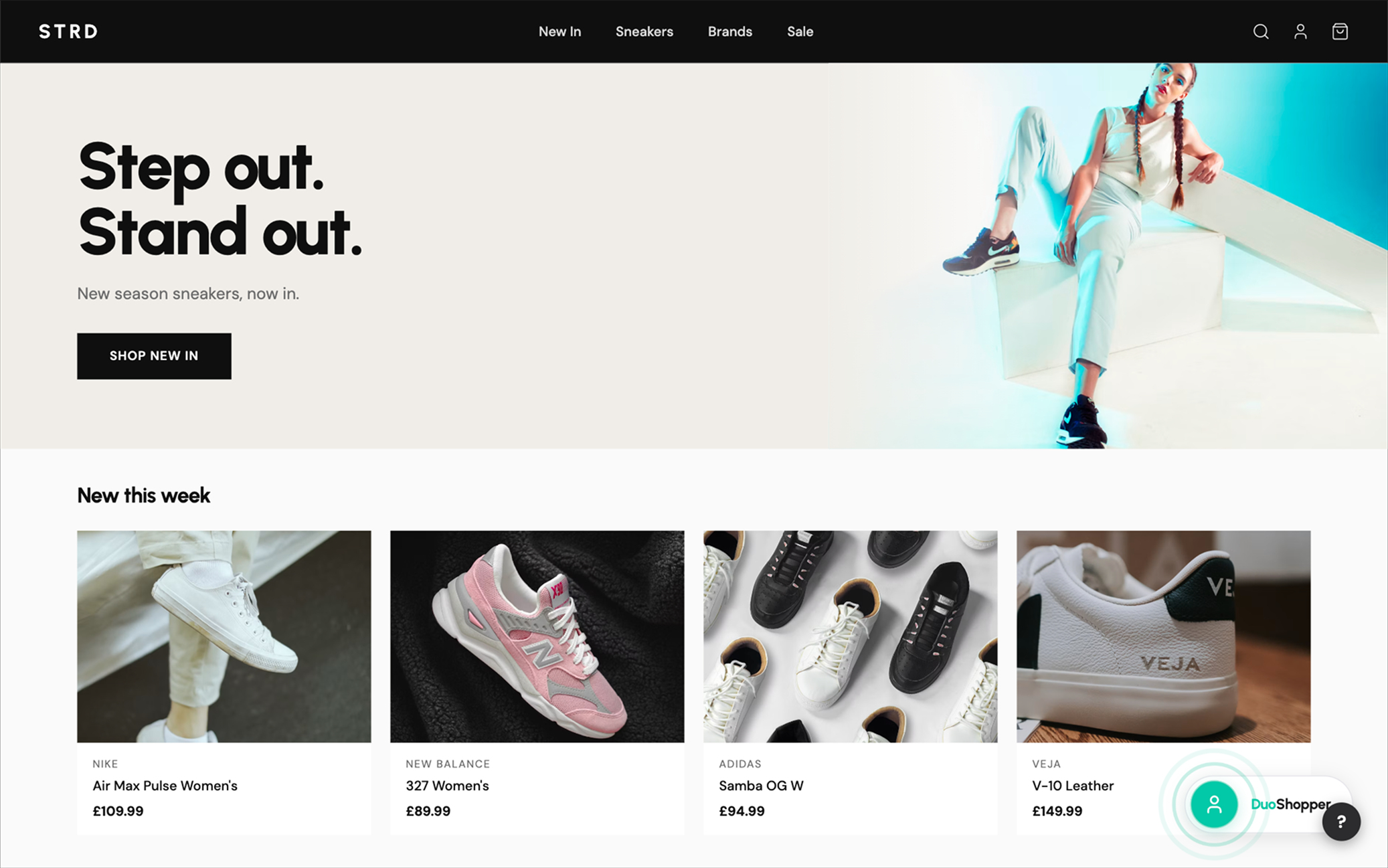
I wanted the journey to feel natural rather than like a series of onboarding steps. The user starts with a normal shopping behaviour, discovers something they want another opinion on, invites someone they trust, and then moves into a shared browsing experience.
The journey therefore moves from browsing alone → inviting a friend → joining the same page → browsing together → reacting and talking → making a shared decision.
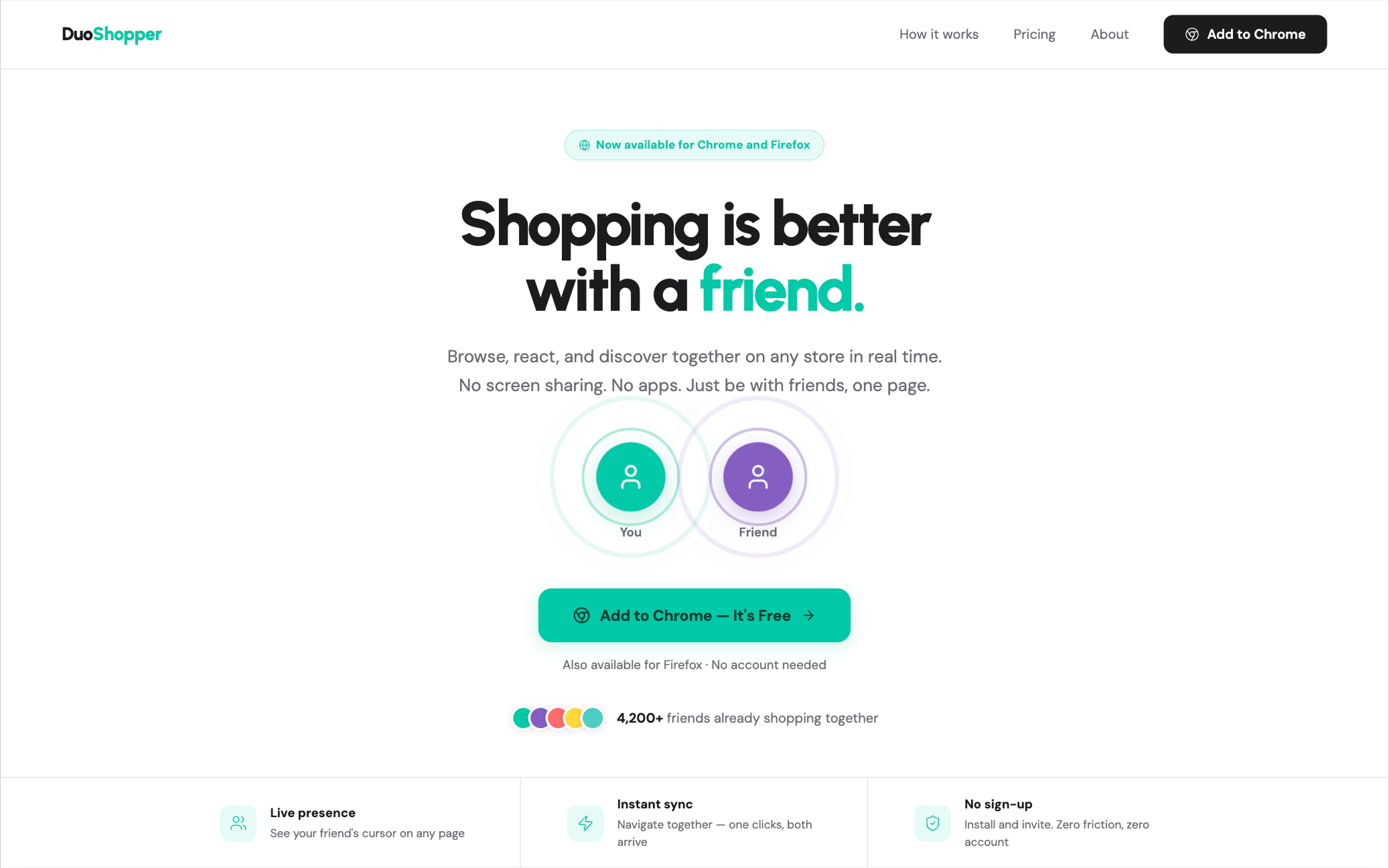
The landing page was designed to communicate this experience quickly, because the product concept itself is quite simple once people can see how the interaction works.
Gallary
Design Decisions
What I cut was as important as what I built.
One of the most important parts of the design process was deciding what DuoShopper did not need.
I explored more structured ways of collaborating, but I realised that too much structure would change the character of the product. If users had to schedule shopping sessions, manage decision cards, or go through unnecessary permissions, the experience would start feeling like a productivity application rather than casual shopping with a friend.
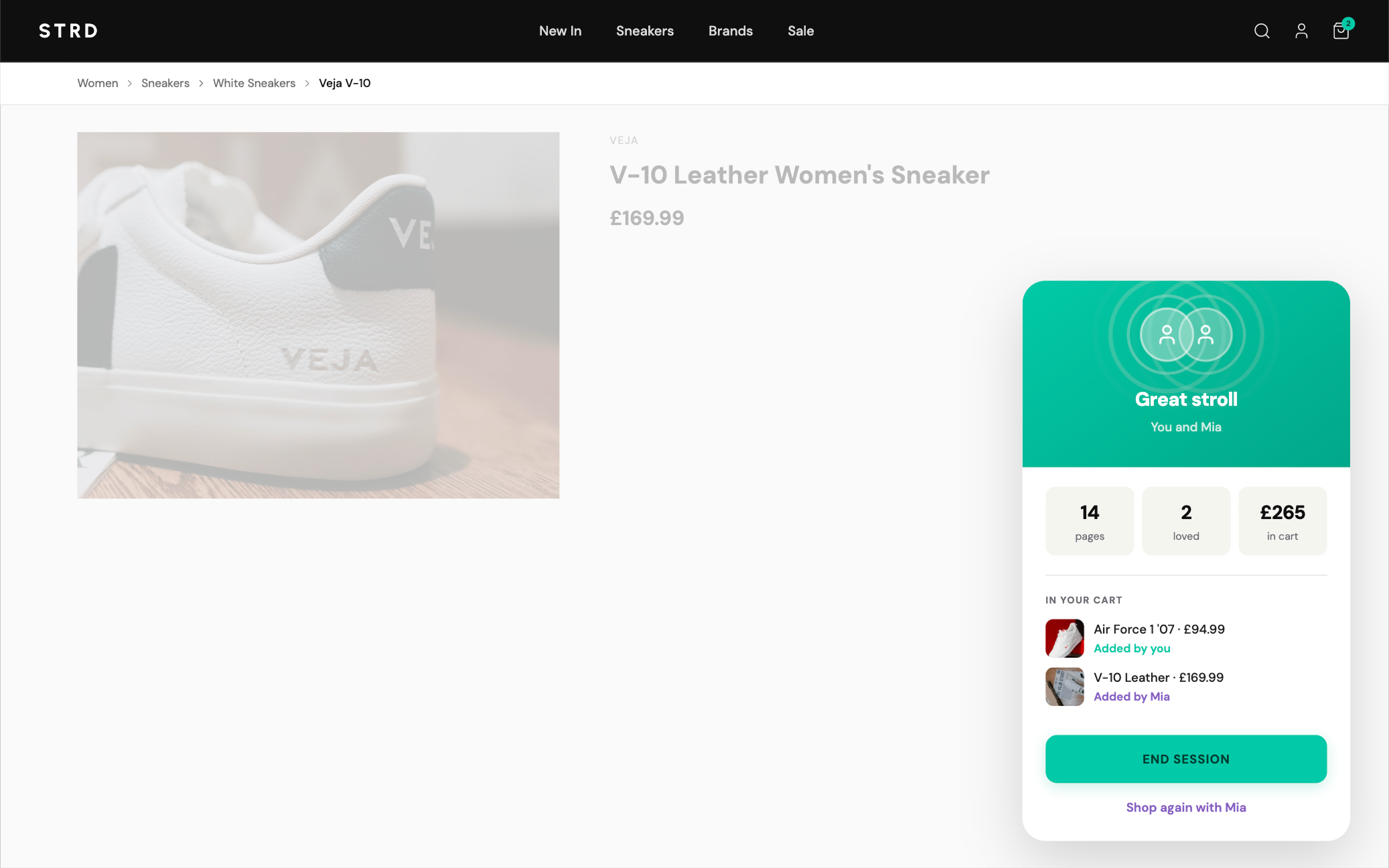
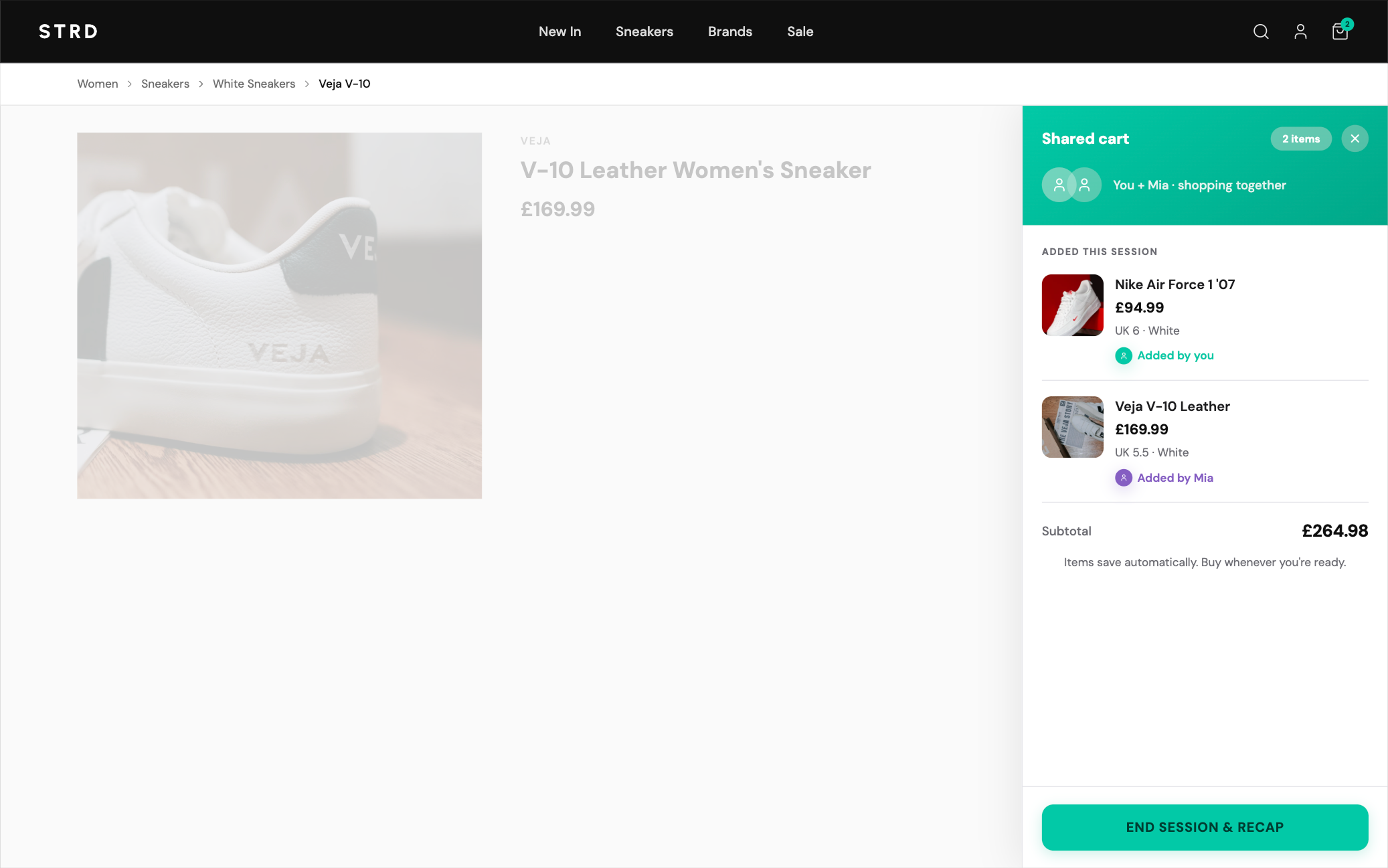
So I kept the interactions that supported a feeling of presence: live cursors, live voice, “Look at This,” and a shared cart.
I removed ideas that introduced too much commitment or made the experience feel overly structured, including scheduling and decision-focused interactions. Friends don't normally schedule a mall visit just to browse together, so I wanted DuoShopper to preserve that spontaneous energy.
This was an important lesson for me as a designer: sometimes improving an experience isn't about adding more functionality. It is about understanding what should remain simple.
Who I Designed It For
I primarily imagined DuoShopper for social Gen Z shoppers between 18 and 27 who already share screenshots, links, and product recommendations with their friends. They already have the behaviour; they just don't have a shopping experience designed specifically around it.
I also considered couples and roommates who might shop together for shared spaces, furniture, groceries, or other everyday purchases. A third audience was people collaborating on group gifts, where several people may need to discuss a product and contribute toward a final purchase.
Although these audiences have different reasons for shopping together, they share the same underlying need: they want another person to be part of the experience.
What I Learned
DuoShopper started with something very personal: being in Germany and wanting my sisters' opinions while shopping online from far away. Through the project, that small everyday frustration became an opportunity to think more broadly about how digital products can recreate human connection.
I learned that the most meaningful product experiences don't always come from adding more features. Sometimes the better approach is to identify a familiar human behaviour and design technology around it.
For DuoShopper, that behaviour was simple: “Look at this. What do you think?”
The final experience was my attempt to make that moment possible, even when the person you want to ask is thousands of kilometres away.
Final Thought
DuoShopper is ultimately about making online shopping feel less solitary and more like something we can experience together.
Shopping is better with a friend.

Final Thought
Role
Output
Social shopping browser extension concept
User journey + interaction system
Landing page + product experience
ExploredSocial
shopping ➔ Remote presence ➔ Real-time collaboration ➔ Interaction design ➔ Content strategy ➔ Shared browsing