

Squeeze
An interactive experiment exploring how digital interfaces can create moments of play, pause, and emotional interaction.
I saw someone squeezing a stress ball in class. Then I wondered: what happens when you don't have one?
The starting point
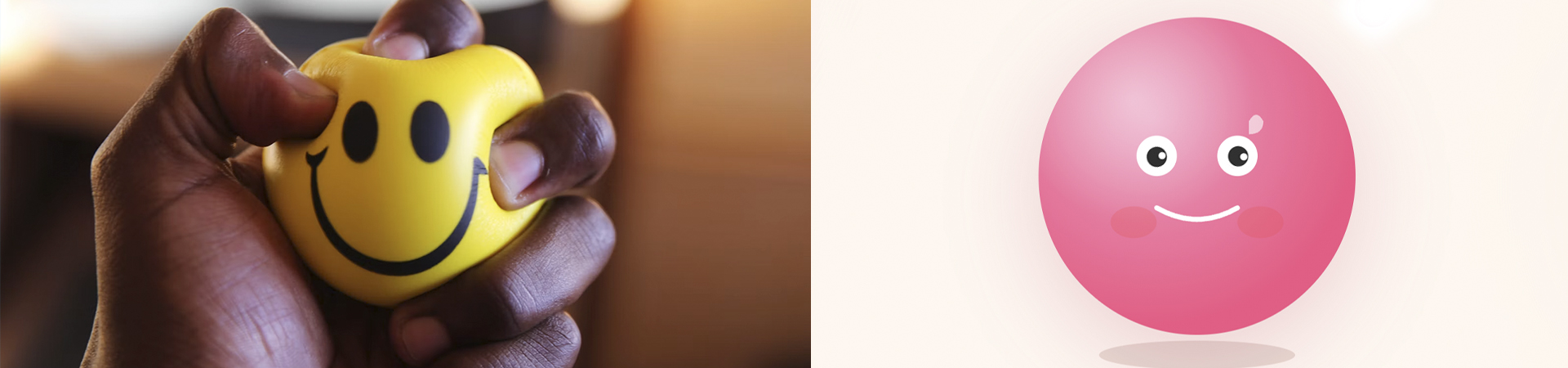
During class, I noticed one of my classmates using a stress-relief ball while working. It was such a small, almost unconscious action: squeeze, release, continue.
But it made me curious.
What if she forgot to bring it one day?That simple thought became the starting point for Squeeze: an exploration of whether a digital interface could offer a similar moment of pause through interaction. I wasn't trying to recreate a physical stress ball on a screen. Instead, I wanted to explore something broader:
Can a digital interface feel playful, responsive, and emotionally engaging even when the interaction itself is very simple?
Turning a physical gesture into a digital interaction
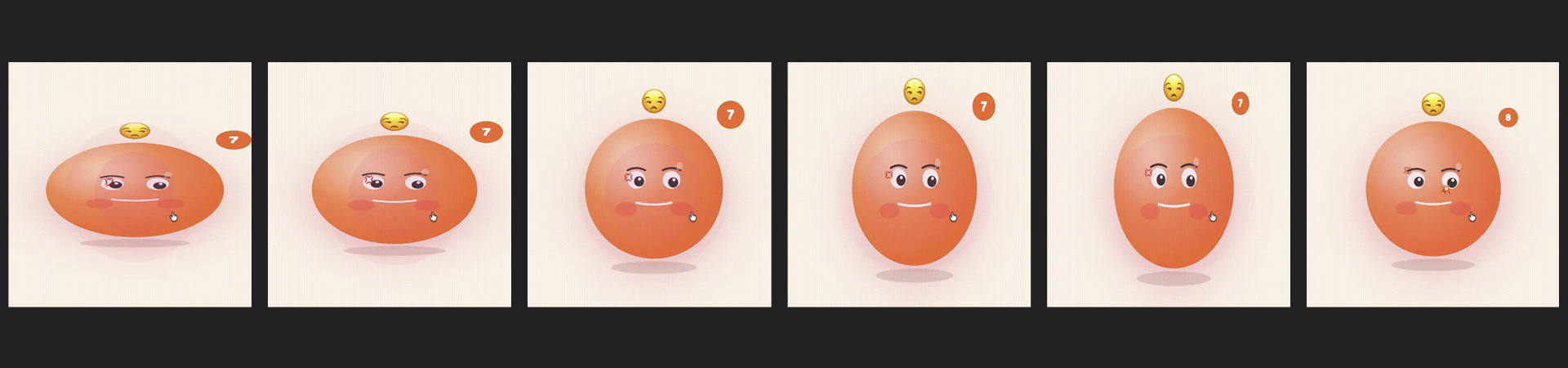
A physical stress ball feels satisfying because it responds immediately. You apply pressure; it changes. You let go; it returns. I wanted to translate that cause-and-response into a digital experience. So I created a playful interactive object that reacts as you interact with it. The more you engage with it, the more expressive it becomes.
Its shape changes.
Its expression changes.
Its eyes follow your movement.
The interface doesn't simply tell you what to do.
It responds to you.
Designing for a moment of pause
Most interfaces are designed around a task. Click this. Complete that. Move to the next screen. Squeeze was intentionally different. There is no productivity goal and no complicated journey. You arrive, interact, and take a small break from whatever you were doing. That led me to a simple design principle:
Make the interaction the experience.
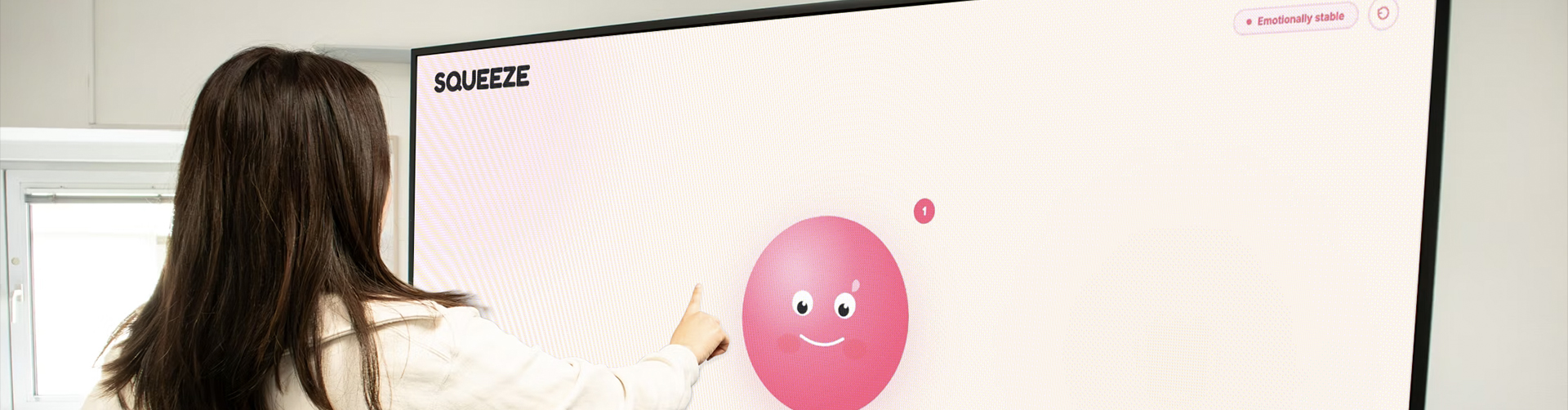
Instead of filling the screen with controls, I kept the interface focused on one interactive object. The challenge became making that object feel responsive enough that the user naturally understands:
“I can play with this.”

Giving the interface a personality
One of my favorite parts of the project was experimenting with small moments of personality. The eyes follow the cursor. The object changes its expression. Its behavior becomes increasingly exaggerated as you continue interacting. These details aren't necessary for the interaction to work. But they change how the interface feels. Instead of interacting with a static webpage, you're interacting with something that reacts back.
That became an important part of the experiment:
How much personality can a few carefully designed interactions give to a digital object?
What I explored
Interaction design
Creating a simple interaction loop that requires almost no explanation.
Motion & micro-interactions
Using movement and visual feedback to communicate the object's state.
Digital character
Exploring how expression and responsiveness can make an interface feel more engaging.
Playful UI
Designing an experience without a conventional “task” to complete.
Try Squeeze
An interactive experiment in play, pause, and emotional interaction.