

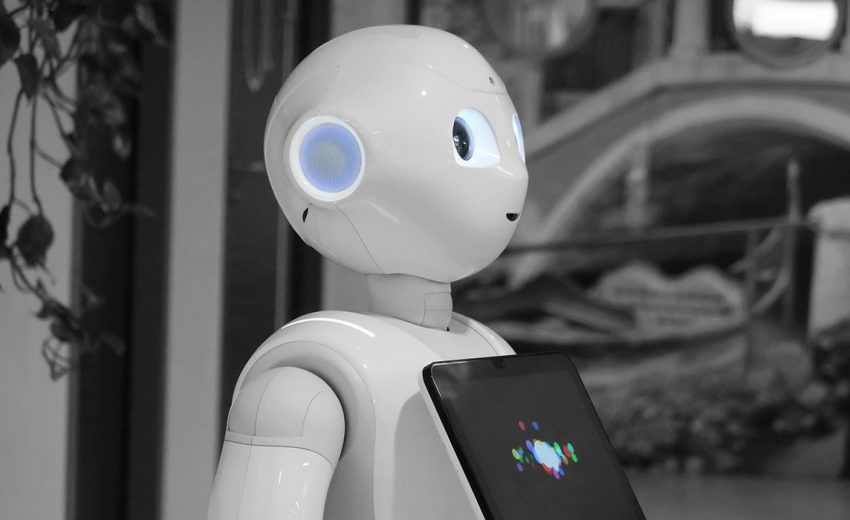
AI has revolutionized creation. Open up any design community today, and you’ll see examples of designs that were generated by AI. The process of using AI in design can be fun, helpful, and occasionally confusing. New tools come out every week, and sometimes it is hard to find time for actual design instead of exploring new AI tools.
However, I don’t think that the right question for a designer is “What AI tool should a designer use?” It is much more interesting to ask “How can I use AI without losing the essential part of the creative process of the design?
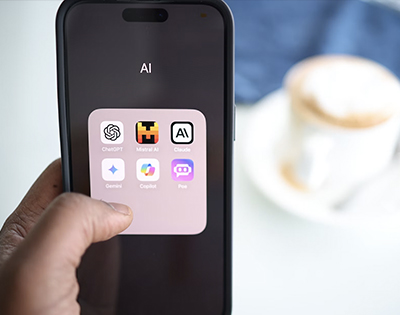
AI helps me most when it becomes a part of the creative process rather than the creative process itself. It allows me to explore my ideas, to generate different versions, to choose the direction, to generate an image, and to perform some routine processes faster. However, I still need to make all the important choices about the design: what message it has to deliver, for whom, what kind of feeling it has to evoke, and why it is better than another.
This approach changes everything. Start from the concept, not from the prompt
One of the simplest errors is to open an AI image generator and begin writing prompts right away. We have all been there. There is a blank page, so maybe AI can come up with some ideas. But good design does not typically begin from there.
Prior to asking the AI to generate something, I always try to comprehend the brief. Who is my target audience? What should I convey through my designs? What values does the brand have? In which channels will the content appear? What should people focus on first?
After answering these questions, the AI becomes much more valuable.
Instead of asking the AI to “come up with a cool Instagram post,” I am able to give it a creative task to solve. So, for instance, if I work on a project for a sustainable fashion brand targeting young professionals in Berlin, I can ask AI to come up with visual directions, which would convey the idea of sustainability without depicting the usual icons of leaves, trees, and recycling.
Suddenly, I am not asking the AI to design something for me. I am asking the AI to assist me in thinking.
And this is the point when I find AI truly interesting.
Give your AI a roleAnother tiny tweak that can create a lot of differences is setting up the persona for the AI prior to tasking it to do something. Imagine that you are working with a designer. By saying “Come up with a poster design,” you give them next to no context. However, by saying “Behave like a senior art director with the experience of working with fashion and digital campaigns. Give your critique and suggest three different directions,” you are setting them a definite role. Something along those lines can be done with AI. |
For instance, I can initiate a project by saying something like this:
“Behave like my senior media designer and art director. You know everything about branding, social media campaigns, typography, and digital ads. Critique my weak ideas rather than agree with all my suggestions. Your role is to provide advice based on the principles of visual communication, audience, composition, and branding.
It opens up completely different dialogues.
Now I am free to ask the AI to brainstorm with me, to question my decisions, and suggest something else. When researching some aspects, I might set up the designer as a design researcher. And when reviewing the finished projects, I might ask the AI to behave like a critical design reviewer. Persona does not make AI any smarter, but it gives context and direction to the discussion.
Good prompting is really good art direction
There’s a lot of buzz around becoming a “prompt engineer.” As a designer, I believe it would be much more helpful to consider the opportunity to become better at visual direction.
Compare:
“Create a modern skincare advertisement.”
to:
“Create a premium skincare advertisement that has a calm editorial mood. Show the product on a light stone texture in soft morning light. The composition should be minimalistic, and there should be some room on the left side for typography. The image shouldn’t have a super luxurious, glossy look.”
The second prompt seems more like a creative brief. It not only describes how the product should look, but also its mood and how the image should be designed. This is something that designers already know.
Composition, negative space, lighting, hierarchy, colors, and typography these are just a few things we think about. AI is just one more field where we can use our skills.
Use AI to explore, not just to generate
This might just be one of my favourite AI applications.
You may have a concept in mind but are unsure how it should look. Typically, you would refer to Pinterest, Behance, or even stock websites for inspiration. It will take a while before you get a sense of what direction you need to move forward.
But AI will speed up this process.
You can play around with mood, photographic style, composition, materials, environment, and so much more. You may find out that what was intended to be a commercial ad is better served as an editorial campaign. Or maybe the concept sounds great on paper, but when visualized, it fails miserably.
This is important.
The AI image does not always have to become the result. Sometimes its sole purpose is to answer the question:
“Should I invest in this idea?”
Don’t accept the first AI image
Here, the designer’s eye plays a crucial role.
AI will create a visually pleasing image in seconds. But visually pleasing doesn’t necessarily imply usable.
It could be that the composition is off. It could be that there is not enough space for the title. It could be that the product is looking slightly unreal. It could be that the colors do not match the brand. It could be that the design looks like something that thousands of other people are creating.
It needs to be said by a designer – “This looks great, but it doesn’t work.”
Such a statement is becoming more relevant in an AI-based process.
It’s not just about producing an image by a media designer. It’s about recognising what image communicates the right message.
AI can also become your video assistant
The same is true of videos.
AI technology can aid in creating storyboards, experimenting with motions, making small video sequences, generating backgrounds, and creating various versions of social media content. It might be especially helpful in cases where a marketing campaign should be available on Instagram, TikTok, web pages, and advertising platforms.
However, once again, I would not ask the question “What video can AI create?”
I would start with “What does the audience have to see?”
A five-second video with a message can be more valuable than a twenty-second video created with AI and lacking a plot.
It is important that even in the era of AI technologies, motion still requires rhythm, hierarchy, and purpose. AI technologies can generate the ingredients, but their combination must be decided by the designer.
Let AI help with words too
The art of media design does not rely solely on visual cues. Headlines, captions, campaign copy, call-to-action copy, and even short video scripts are all components of the job of a media designer.
If you require multiple options, AI can come in handy.
Instead of letting AI write the actual Instagram caption for you, ask it to give you some directions. For example, maybe one should be fun, one should be a bit more editorial, and one a little more to-the-point.
Edit the results.
This is because, while AI writing is always grammatically correct, it is often generic and impersonal. The copy that AI generates may have no personality at all.
I would rather let AI provide me with ten starting points than use one piece of AI writing without any consideration.
Research faster, but don’t stop researching
The use of AI can also assist in the initial stage of any work when it comes to understanding the audience, competitors, or even the market.
AI can help in formulating research questions, organizing data, and pointing out things that you might not have thought of.
For instance, if you are developing a travel campaign for students, AI will assist you in considering questions like what information they require prior to booking, what makes them worried about their travel, or what kind of content they believe in.
However, I would never let it end here.
AI can be wrong and can provide information lacking the required context. In cases of critical research, you still need reliable sources, real users, and your critical thinking.
AI will only help you begin the research more quickly. However, it should not stop you from conducting further research.
Let AI take care of the boring stuff
But not all aspects of design have to be stimulating.
Stripping backgrounds, making variations, blowing up pictures, scaling down and up, and formatting in different ways may require an unexpectedly long period of time.
This is the type of work that AI can be most helpful with.
If a program can reduce a mundane 30-minute job into a five-minute job, I would prefer to spend those additional 25 minutes mulling over my design work.
That is one of the greatest benefits of using AI for designers. It doesn’t necessarily mean that it creates what we couldn’t do on our own. Sometimes it just gets the tedious work done.
But don’t let AI design everything for you
This is where I believe that designers have to be wary.
If we are having AI create all our concepts, select all our colors, write all our headlines, and design all our layouts, then we might just get really good at choosing things while not getting any better at designing.
There is a distinction.
The designer needs to be able to begin with a clean slate.
Typography needs to mean something to us. Composition needs to mean something to us. Color theory needs to mean something to us.
AI should make us stronger; it shouldn’t kill our curiosity.
Your design style still matters
There is another problem with AI: everything will eventually seem the same.
The same cinematic lighting. The same flawless product photography. The same futuristic gradients. The same “premium minimalist” style.
If all designers rely on the same software and are satisfied with the first result, then creativity will become predictable rather quickly.
This is why your design thinking is so important.
Your decisions about fonts, layout, visuals, and the story behind the brand should determine what you want AI to design for you.
Do not ask AI for style.
Bring your style to the AI.
The future is not AI versus designers
I don’t view AI and designers as two different factions competing against each other.
Rather, I view AI as yet another tool in the designer’s toolkit.
Photoshop didn’t make designers irrelevant. Figma didn’t make designers irrelevant. Photographs didn’t make illustrations irrelevant. Digital design didn’t make print design irrelevant.
The technology changed, and the designer changed.
AI represents yet another revolution.
The designers who will reap the most benefits from it will likely be those who aren’t using AI to do everything, but rather know when its assistance is valuable and when human creativity is invaluable.
AI can provide more choices, increase speed and enable experimentation.
But it can’t tell you what is important to your audience like a good designer can.
Final thought
Learning AI as a media designer is not, for me, about learning hundreds of prompts or collecting all new tools. Learning AI as a media designer is about learning how to steer, critique, and shape what AI provides you. When use it to break out of a rut and research an idea. You use it to try out a direction and generate variations. Also you can use it to minimize repetitive work to challenge yourself.
But remember the key aspect of the process is left in your hands.
- The idea.
- The decision-making.
- The taste.
- The rationale of the design.
Because AI can generate thousands of images in seconds. The true skill is recognizing which one is worth keeping.

November 13, 2023
Create Digital Content That People Actually Notice
November 13, 2023